
One of the extremely rare things I could add to my resume—if it would do any good—is I have created my own money, organized a bank based on it, and generated something like $400,000 (if memory serves) worth of economic activity in the city where I lived at the time. Here’re some banknotes I kept as mementos.

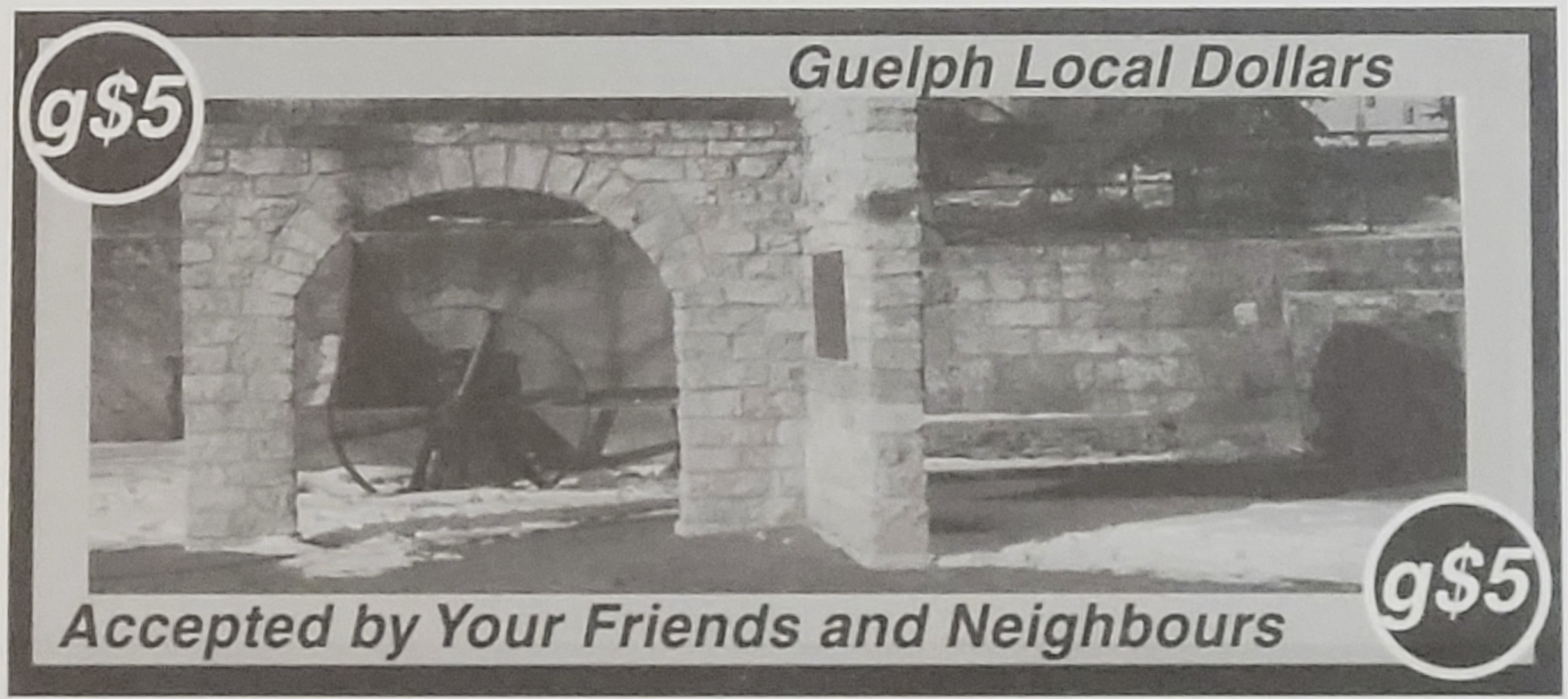
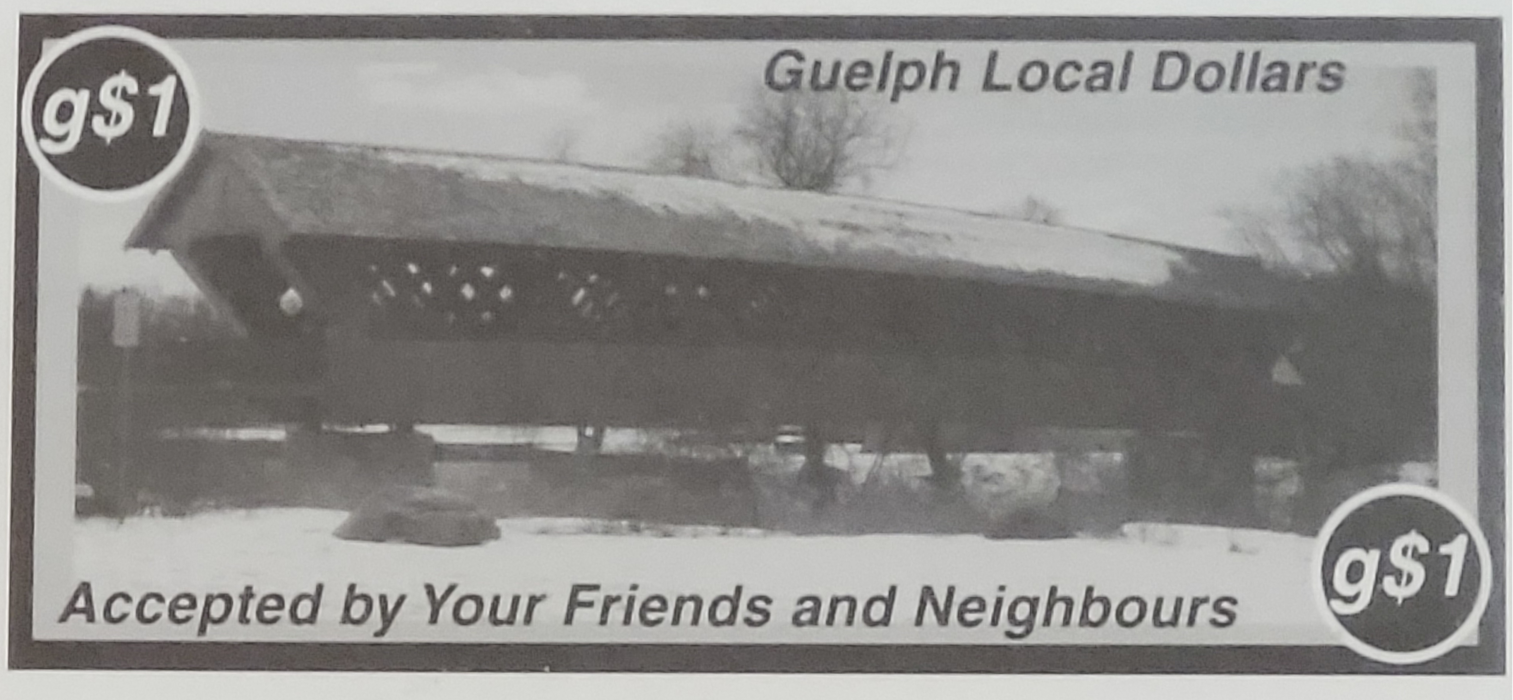
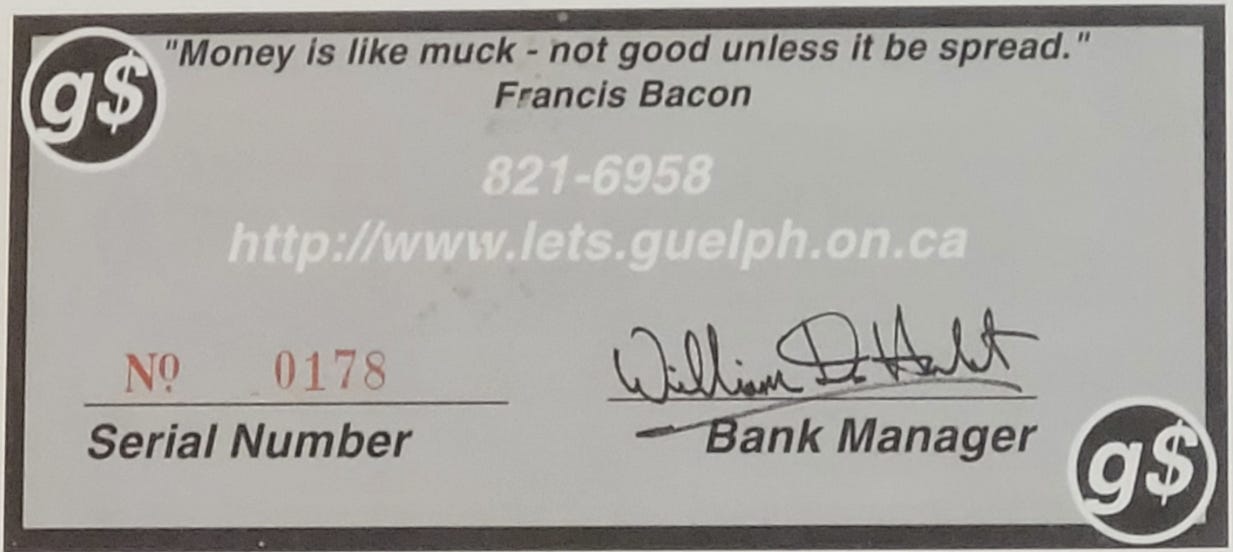
This was something of a wild ride and I wouldn’t advise anyone else to do the same thing. But two very good things came out of it. First, I built connections in the community that were to prove extremely important for political things. Second, I personally learned a lot about how the world actually works.
One of those things I learned was what money actually is and how much of the ‘conventional wisdom’ people read in the legacy news and hear politicians talk about it is deeply, profoundly, wrong.
Money is Psychology
Ultimately, money is nothing more than a collective decision by people to accept something inherently worthless—like a scrap of paper or plastic, a split stick, bits and bites on a computer screen, or coins made of metal—in exchange for things that do have intrinsic value, like a dozen eggs, an hour’s work mending clothes, etc. That’s literally all it is. If you can convince people to use it, it has value. If you can’t, it doesn’t.
I won’t speculate how I was able to get so many people to use the money I created, but traditionally people talk about ‘barter’ and how money was created to make it easier to buy and sell. The problem with this hypothesis is there doesn’t seem to be any evidence that this is actually how money came about.
Actually, we don’t have any written evidence of how money came about—mostly because it appears that money created writing in the first place! We know this because the very first writing of any sort comes from the discovery of old tax and accounting records.
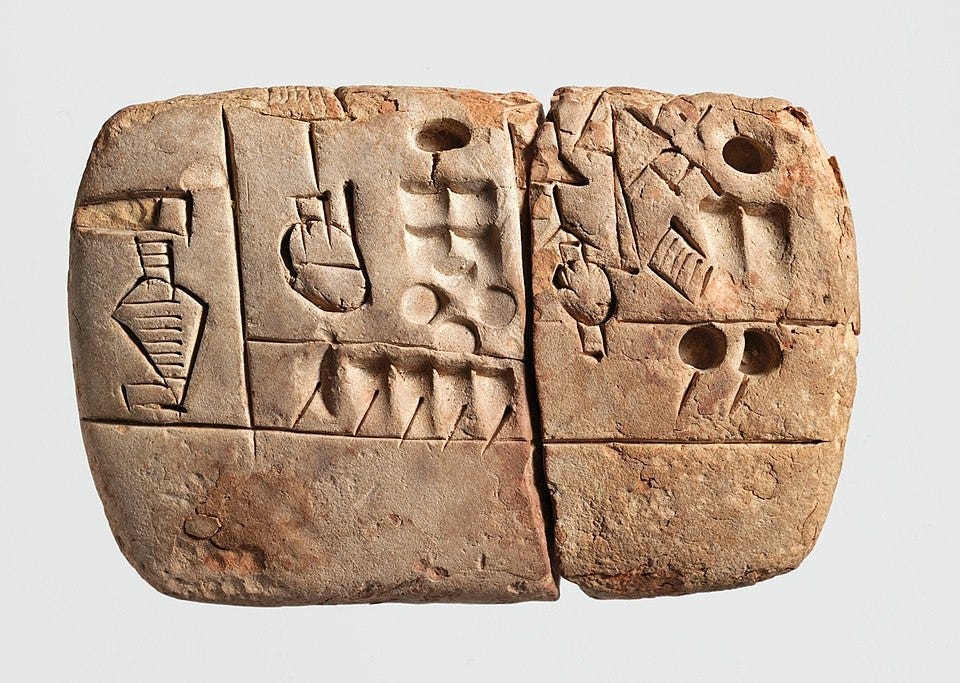
Without having any written records of the first money, we can probably assume that it was created the same way that almost every other type of money was—through taxation.
Many years ago I took a course titled ‘Intro to the 3rd World’. One of the many interesting things I learned from the instructor (may she be doing well—I remember her fondly) was how colonial governments forced subsistence farmers to grow cash crops for export to Europe. Simply put, the administration started taxing the people and refused to accept anything but government currency. This meant that peasants who were self-sufficient until then had to find some way to get hard currency or else risk some sort of punitive action against them. And that could take the form of taking away their lands, burning their food crops, cutting off people’s hands, etc—depending on how brutal the colonial authorities wanted to be.
The same sort of thing happened in Europe. A king would start levying taxes and when people had to find the money to pay him, they’d have to accept the money he created when he wanted to buy things from them. And in Europe up until surprising recently, many rulers were able to buy things using split pieces of wood, known as tally sticks.
Here’s a modern recreation:

If you look at it, it’s a piece of wood that has a larger part (the ‘stock’) and a smaller part (the ‘foil’ or ‘stub’). The larger part was held by whomever sold the product or service. It was something like an IOU. The marks on the tally stick tell you how much it is worth:
a curved notch, about the width of a thumb, represented £100. To the right of this in the picture, a ”V” is incised. This represents £20. To the right of that, with “the width of a ripe barleycorn” is a notch representing £1. Two further notches to the right, of diminishing widths, represent 1 shilling and 1 penny respectively. The total value of the tally in the picture is £121 plus 1 shilling and 1 penny.
The back of the tally stick would have writing on it identifying the person who sold the goods, who bought it, and other details that allowed the tax man to figure out which stock fit which foil:
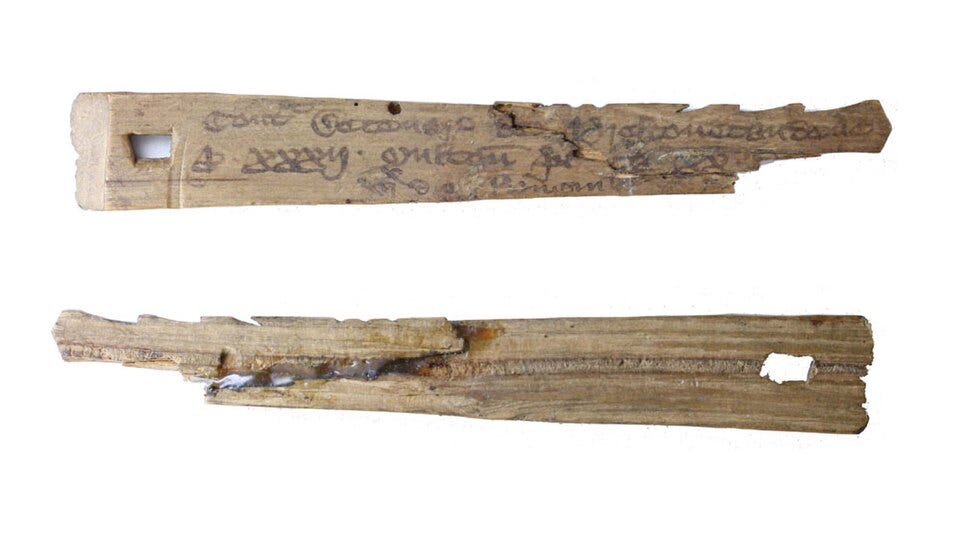
Because of the splits, grain, etc, on the tally stick it was impossible to change the amount on either stick without it becoming extremely obvious when it was time to match them together. This prevented fraud. The people who held the ‘stock’ (yes, this is where the term ‘stockholder’ comes from) were able to transfer them to a third party in exchange for goods or services—which is what makes this money.
This is how it would work. The king decides to buy grain, pigs, swords, wood, etc, with tally sticks. Because he’s the king—well, people have to accept the tally sticks whether they like them or not. At the same time, he is taxing people in his country. Because he accepts transferable tally sticks (although he’ll take gold if people have and wish to use it—which most won’t because people like to hold onto precious metals if they can), people who have more tally sticks than they need for taxes can then use them to buy stuff they need from other people who either don’t have anything at all to pay the taxes, or they have gold but don’t want to give it to the king unless they have nothing else.
When the tax collector comes around, he gets a tally stick in payment and makes a record of who used it to pay their taxes and which foil or stub this stock was split from. That way, he can check the records to see whether or not this is a real tally stick and not a fake. And, whether or not the amount on the stock matches the amount on the foil. This system was remarkably effective and only completely ceased to used in England in the early 19th century (Secret History).
The important take-away from this historical record is the king wasn’t borrowing money or getting it in taxation. Instead, he ran a deficit (ie: created the tally sticks). Then he used it to buy the stuff he needed. And the way he forced his subjects to accept this money by forcing them to pay taxes and allowing them to pay with tally sticks.
The only place where this system falls apart is with regard to international trade. The tally sticks of England weren’t worth much to a mercenary or merchant from Flanders. They wanted to be paid in gold. I assume that’s the part of medieval finance that involved Kings going into debt with money traders and gold smiths. (Which is what most history books fixate upon.) But in actual fact, while this was important for the parties involved—the actual currency of the kingdom, tally sticks, were more important to the economy of day-to-day life.
Beyond Tally Sticks and Paper Money
It isn’t just tally sticks that get pulled out of thin air by the government. Nowadays it’s numbers on a computer. I’ve posted below a clip from a YouTube video by L. Randall Wray—who is a leading academic proponent of a school of economics called Modern Monetary Theory (MMT). The whole video is an introduction to Modern Monetary Theory for lay people. It’s over 1 hour long, so I won’t try to put it into this article. But here’s a short clip where he describes how money actually gets created by the US government—the same way other countries with their own currencies (like Canada) do too.
I suspect the above is a lot for most readers to process. (I know I had to watch this short video several times to begin to really understand what he’s saying.) I don’t want to overwhelm people, so I’m going leave things at that. If you have the time and inclination, I’d suggest taking a look at the full-length video. You might find it mind-blowing.
In my next article in this series I’m going to try to explain the policy implications of this new way of looking at money and government spending. When I started doing this research I found it totally exploded my understanding of what government can do. And I mean in an extremely good way.